Introduction
The exterior of a home creates the first impression. From the entrance pathway to the garden, driveway and courtyard, outdoor surfaces contribute significantly to the appearance and usability of a property.
Choosing the right paving tiles is therefore an important part of residential construction and renovation. The right product should complement the architectural style of the house while meeting the practical requirements of the space.
In Kerala, where seasonal rainfall, humidity and changing weather conditions are important considerations, paving selection requires careful planning.
If you are searching for paving tiles in Kerala, this guide explains the key factors to consider before choosing materials for your home.
1. Understand the Purpose of the Area
The first step is to identify where the paving material will be installed.
Different areas have different requirements.
Garden Pathways
Garden pathways connect different parts of a landscape while creating an organised walking route. Textured rectangular tiles, decorative square pavers and cobblestone-style products can complement garden designs.
Consider the surrounding greenery, pathway width, drainage and the type of walking surface required.
Residential Entrances
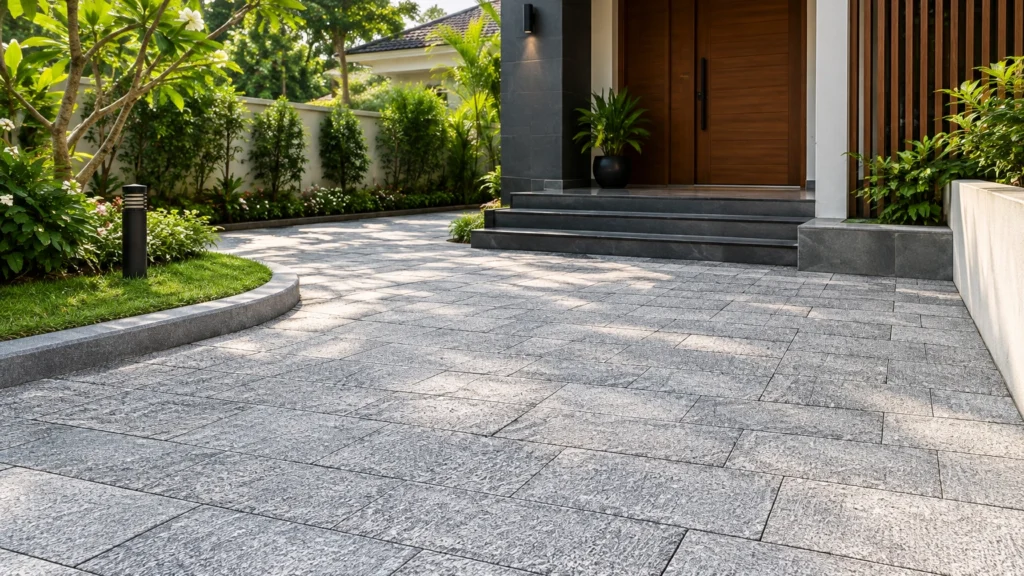
The entrance is often one of the most visible exterior features of a home. Paving materials with coordinated colours and patterns can create a welcoming appearance.
Grey, charcoal, terracotta and stone-effect finishes may suit different architectural styles.
Driveways
Driveways require particular attention to load-bearing suitability. A product designed for pedestrian pathways may not be appropriate for regular vehicle traffic.
Before purchasing driveway paving materials, confirm the product’s thickness, strength, base requirements and suitability for the expected vehicle loads.
Courtyards and Outdoor Seating Areas
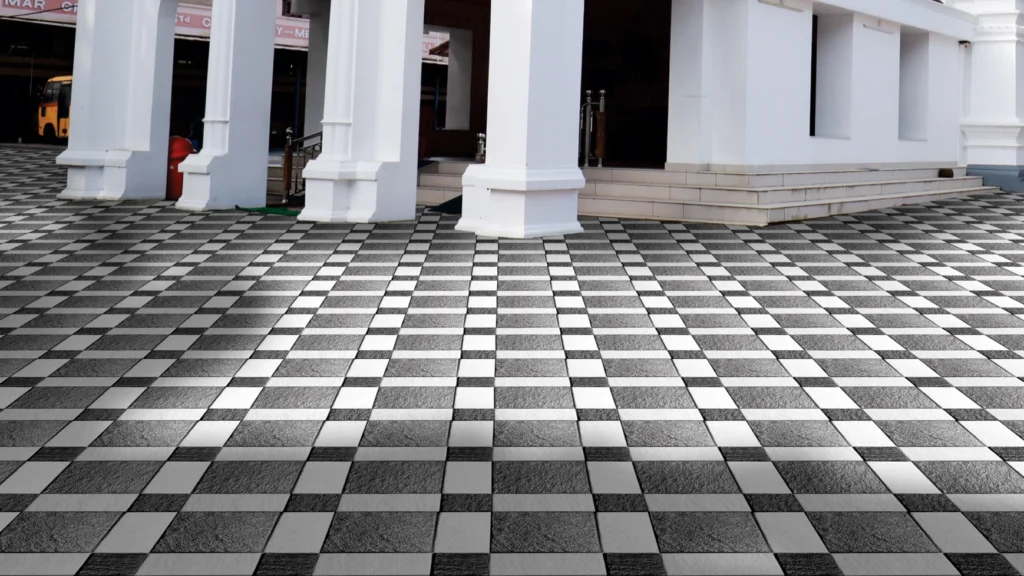
Courtyards and seating spaces can benefit from paving patterns that create visual structure. Square blocks, contrasting colours and textured finishes can help define different zones within an outdoor area.
2. Consider Kerala’s Climate
Kerala experiences significant seasonal rainfall and high humidity. These conditions make drainage and surface selection especially important.
When choosing outdoor paving tiles, consider the following:
- Water drainage: Ensure the paving design and underlying surface allow water to drain appropriately.
- Wet-surface performance: Ask for documented slip-resistance information appropriate to the intended use.
- Material suitability: Confirm that the selected product is intended for outdoor exposure.
- Installation quality: Poor base preparation or inadequate drainage can contribute to water accumulation, movement or uneven surfaces.
- Maintenance requirements: Understand how the material should be cleaned and maintained in a humid environment.
A textured appearance alone does not guarantee that a tile is slip-resistant. Always confirm the product’s technical performance before using it in wet or high-risk areas.
3. Choose a Design That Complements Your Home
Paving tiles contribute to the overall visual character of an exterior space. Consider the architectural style of your property before selecting colours and patterns.
Modern Homes
Contemporary homes often work well with clean layouts, neutral colours and simple geometric patterns.
Grey and charcoal paving products can complement minimalist architecture and modern exterior finishes.
Traditional Homes
Terracotta-inspired tones, cobblestone-style designs and warm colour combinations may complement traditional architectural elements.
Landscaped Gardens
For garden pathways, consider how the paving material will look alongside plants, grass, trees and garden borders.
A combination of earthy tones and textured surfaces can help create visual contrast without overwhelming the landscape.
Commercial-Style Exteriors
Larger outdoor spaces may benefit from repeating patterns, consistent colours and clearly defined pathways.
The selected material should also be appropriate for the expected foot traffic and maintenance requirements.
4. Explore Different Paving Tile Types
Several paving styles can be considered for residential projects.
Textured Rectangular Tiles
These offer a structured appearance and can be installed in aligned or staggered layouts, depending on the product and installation method.
Square Paving Blocks
Square blocks create a balanced, geometric pattern suitable for selected pathways, courtyards and garden spaces.
Cobblestone-Style Pavers
These offer a traditional, stone-inspired appearance for decorative exterior designs.
Grooved Paving Tiles
Linear grooves introduce directional patterns and texture. Their suitability for specific walking surfaces must be confirmed with the product specifications.
Multi-Colour Pavers
Different colours can be combined to define borders, pathways or decorative zones.
When comparing these options, review actual product samples where possible. Photographs and screen displays may not accurately reproduce the final colour or texture.
5. Pay Attention to Installation
Even a suitable paving product can perform poorly if it is installed incorrectly.
Professional installation typically involves assessing the site, preparing the base, planning levels and slopes, addressing drainage and selecting appropriate bedding and jointing methods.
For vehicle-access areas, the base construction must be designed for the expected loading. Outdoor surfaces should also be planned to minimise water pooling and uneven transitions.
Discuss these requirements with your contractor before finalising the purchase.
6. Calculate the Required Quantity
Accurate measurement helps reduce material shortages and unnecessary wastage.
Start by measuring the length and width of a rectangular area.
Area = Length × Width
For example, a pathway measuring 10 metres long and 1.2 metres wide has a surface area of 12 square metres.
The quantity required will depend on the individual product dimensions, layout pattern, cutting requirements and recommended allowance for breakage or wastage.
Ask your supplier to help calculate the required quantity based on the actual product size and layout.
7. Compare More Than Just the Purchase Price
When comparing paving tiles in Kerala, consider the overall project cost rather than the material price alone.
Your budget may include:
- Paving materials.
- Transportation and delivery.
- Base preparation.
- Bedding and jointing materials.
- Installation labour.
- Cutting and wastage.
- Drainage improvements.
- Future maintenance.
A well-planned project accounts for both the material and the installation requirements.
8. Why Consult a Local Paving Supplier?
A supplier familiar with local project requirements can help you compare available products, understand technical specifications and identify suitable options for your intended application.
KAP India Brick & Tiles Pvt. Ltd., located in Kadangode, Thippilassery, Thrissur, offers a selection of textured paving tiles, decorative paving blocks, grooved surfaces and other outdoor surface products.
Established in 2010, the company has experience with distinctive projects across South India.
Customers can contact the team to enquire about product availability, dimensions, colour options and project requirements.
Conclusion
Choosing the best paving tiles for your home in Kerala involves more than selecting an attractive colour. Consider the application, weather exposure, drainage, surface performance, installation requirements, maintenance and total project budget.
With careful planning, the right paving material can help create an outdoor space that complements your home and serves its intended purpose.
If you are exploring paving tiles in Thrissur or elsewhere in Kerala, contact KAP India Brick & Tiles Pvt. Ltd. to discuss the available options for your project.
Contact: +91 98468 31177
Email:kapbricks@gmail.com
Location:Kadangode, Thippilassery, Thrissur, Kerala.
Planning a new pathway, courtyard or driveway? Contact KAP India Brick & Tiles to explore paving options for your project.